The best approach for a school fundraiser is selling small, customizable 3D printed keepsakes at school events and through a few simple online listings. Think photo keychains, name tags, safety whistles, holiday ornaments, and mini mascots: items that cost little to print, take almost no storage space, and feel personal enough that parents want one.
TL;DR:
- An ornament using 20 grams of filament costs about $1.10 to make and can sell for $10; price other items by their production costs.
- A NonCommercial license forbids selling prints, even to recover costs; confirm commercial permission and record each file’s creator, source, license, and download date.
- Sell at concerts, parent nights, sports games, and school stores first; use one online listing only if volunteers can manage shipping and custom orders.
- Batch print whistles, name tags, and bag clips with little oversight, but reserve photo figurines and mascots for individual student design projects.
- Use nontoxic PLA, keep a license log for outside files, and avoid sharing students’ full names or faces publicly without parental permission.
Table of Contents
- 1. Twenty Fundraiser Items That Actually Sell
- 2. How to Price Your Prints Without Losing Money
- 3. Licensing and Copyright Checks Before You Sell
- 3. Where to Sell Your Fundraiser Items
- 4. Real Fundraiser Projects Worth Learning From
- 5. A Step-by-Step Runbook for Your Fundraiser
- Classroom Priorities, Safety, and Why Small Keepsakes Work
- Optional: Let 3D Print Pics Handle the Polished Keepsakes
- FAQ
- Sources
- Grants, Education Programs, and License Guides for Schools
1. Twenty Fundraiser Items That Actually Sell
Not every item earns a spot on your print bed. Some sell because they're useful, some because they're personal, and a few because they tie into a season or event. Grouping ideas this way helps you decide what to batch print and what to save for custom orders.
Keepsakes and personal items work best when students design them, since a photo-to-3D keychain or mini figurine feels unique to the buyer.
- Photo or logo keychains: small, prints quickly, sells for a modest price.
- Mini photo-to-3D figurines: great student design project, takes several hours to print, sells for a higher price.
- Pet or family miniatures: popular at parent nights, 1 to 3 hour print, $10 to $20.
Functional items move fast because buyers can use them immediately.
- Custom name tags or badge holders: quick batch production, 20 to 40 minutes each, $4 to $8.
- Phone stands or pencil holders: simple geometry, easy for beginners, $6 to $12.
Safety and community items give your fundraiser a clear purpose beyond raising cash.
- Safety whistles: tiny prints, batch well, $3 to $6 each, and double as a service project.
- Reusable bag clips or carabiner hooks: low material use, a modest price.
Seasonal and holiday items sell in bursts around concerts and winter events.
- Custom ornaments with a student's photo or name: print relatively quickly, sell for a moderate price.
- Holiday-themed cookie cutters: functional and reusable, a modest price.
Event-specific items fit school spirit nights, sports games, and fairs.
- Team mascots or logo medallions: great maker-fair centerpiece, $12 to $20.
- Custom trophy toppers for intramural events: a moderate price.
Batch-production items like whistles, name tags, and bag clips suit assembly-line printing with minimal student oversight, while keepsakes and mascots work better as individual design assignments.
2. How to Price Your Prints Without Losing Money
Pricing only feels complicated the first time. Once you know your filament cost per gram and your printer's rough hourly cost, the rest is arithmetic.
- Weigh or estimate grams used per item, then multiply by your filament's cost per gram.
- Add a small time charge for machine hours (a modest hourly charge can help cover wear and electricity).
- Add packaging and any paint or finishing supplies.
- Multiply the total cost by a markup (2 to 3 times cost is common for school fundraisers) or add a fixed margin per item.
A simple formula teachers can reuse: retail price = (material cost + time cost + packaging) × markup. Small buyers typically pay $20 to $150 for custom 3D printed keepsakes, which gives you a useful ceiling when setting prices for more detailed pieces.
Three quick examples: a keychain's material and machine costs depend on its design and production, and its price should reflect those costs. An ornament using 20 grams runs closer to $1.10 total, priced at $10. A name tag's material and production costs depend on its design, and its price should reflect those costs.
3. Licensing and Copyright Checks Before You Sell
Selling a 3D print means selling someone's design, even when you printed it yourself, so the model's license matters as much as the plastic.
Creative Commons licenses vary widely. CC0 and CC-BY models generally allow commercial sales, and CC-BY-SA does too as long as you share derivative files under the same terms, but any NC (NonCommercial) variant forbids selling the printed object, even if you only charge for materials and machine time, according to a license clarification on commercial use. A full breakdown of what counts as commercial use and which licenses allow it is laid out in this guide to selling 3D prints legally.
Before listing anything for sale, run these checks:
- Confirm the model's license explicitly allows commercial use, not just personal use.
- Avoid protected characters, logos, or branded designs unless you have permission.
- Keep a record of the designer's name, source link, license type, and download date for every file you use.
Most marketplace and file-sharing rules follow the same logic: sale is fine when the license says so, and a 2026 license guide walks through the common license types if you want the full decision tree.
Pro Tip: Default to student-made or school-created designs whenever possible. They skip the licensing question entirely and give students a real design credit.
For school policy, three habits go a long way: favor original student designs, write a short acceptable-use policy for the makerspace, and keep a shared folder of licenses and receipts for anything downloaded from outside sources.
3. Where to Sell Your Fundraiser Items
Your audience is already walking through your building several times a year, so start there before looking outside it.
- Set up a table at concerts, parent nights, and sports games where foot traffic is already high.
- Use the school store, if one exists, for repeat sales of small items like keychains and name tags.
- List a handful of popular items on a single Etsy page or a school shop page for occasional online sales, but skip broad online marketplaces if you can't keep up with shipping and custom orders — or check out Sell With Design for Higher Conversion Rates to boost your online fundraiser success.
- Add a demo table where buyers watch an item print.
- Post clear signage with prices so volunteers aren't fielding the same question all day.
- Bundle small items (a keychain and a name tag) for a slightly higher average sale.
- Share photos on school social accounts a few days before the event.
- Recruit a few student ambassadors to talk up the project to classmates and families.
4. Real Fundraiser Projects Worth Learning From
Small, useful items with a clear purpose tend to outperform elaborate ones. A youth maker's safety whistle project is a good example: it scaled to more than 3,400 printed whistles distributed to local rescue teams, built on a design simple enough to batch print by the hundreds.

Community face shield drives during past public health needs followed a similar pattern: a coordinated printing fundraiser combined printing capacity, a clear beneficiary, and transparent cost reporting to attract donations.
A few lessons carry over directly to classrooms:
- A single, simple product beats a catalog of complicated ones.
- Partnering with a local organization (a rescue team, a clinic, a shelter) gives buyers a reason to care.
- Low-cost materials and easy assembly let more students participate, whether at a maker fair table or a service-learning project.
5. A Step-by-Step Runbook for Your Fundraiser
- Pick one or two items from your shortlist.
- Estimate material and time costs using the pricing formula above.
- Run the licensing check on every downloaded file.
- Schedule print batches around your printer's availability.
- Assign packaging, pricing, and sales roles to students.
- Choose your sales channels: in-person events first, online listings second.
- Run the sales day with a demo table and clear pricing.
- Track sales and thank donors or buyers afterward.
Assign roles early: design students build files, printing students manage the queue, sales students handle the table, and accounting students track a simple sales log and license log.
Pro Tip: Save failed or leftover print scraps in a labeled bin. Many filaments can be reused in future small projects, cutting material waste over the semester.
Classroom Priorities, Safety, and Why Small Keepsakes Work
A school fundraiser works best when it teaches something first and raises money second. We print using non-toxic PLA, and we keep a simple license log for every outside file so nobody has to guess later. Protect student privacy too: avoid posting full names or faces publicly without a parent's permission.
— Ian
Optional: Let 3D Print Pics Handle the Polished Keepsakes
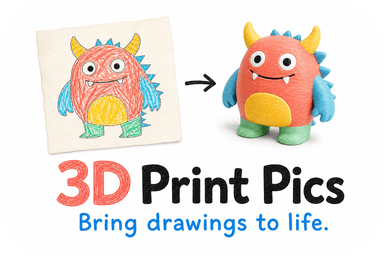
When printer time is limited or you want finished, gift-quality keepsakes without the production load, we turn a photo, drawing, or logo into a custom 3D model with a preview, size and color choices, and direct delivery.
- Good for small batches of personalized keepsakes without tying up your classroom printer.
- Useful when a fundraiser item needs to look finished right out of the box.
- Fits one-off gift orders alongside your student-made production line.

FAQ
What are some creative 3D printing ideas for fundraisers?
Photo keychains, custom name tags, safety whistles, holiday ornaments, and mini team mascots all sell well because they're small, personal, and cheap to produce. Items tied to a season or school event, like spirit night medallions, tend to move faster than generic designs.
What's the best platform to sell 3D printed items?
For school groups, in-person sales at events and school stores usually outperform open online marketplaces, since buyers already know and trust the cause. A single Etsy listing or a school shop page works for occasional online sales, but check each design's license before listing it, as outlined in this license guide.
Where can I find free 3D models for 3D printing?
Open repositories like Thingiverse and Printables host large libraries of free STL files, but not every file allows commercial use. Always check the specific license attached to the file you download, since NC variants forbid selling the printed object even for a fundraiser.
What are 150 cool things I can 3D print for a fundraiser?
There's no fixed list of 150 items, but the strongest fundraiser picks are small, cheap to print, and personal: keychains, name tags, ornaments, phone stands, and safety whistles cover most successful categories. Focus on a handful of items you can batch print well rather than chasing a long catalog.
Sources
- Can You Sell 3D Prints? Licences, IP and Commercial Use - Filaquote
- Selling 3D Printed Items Legally: 2026 License Guide
- [K-12 3D Printing Program for Schools – ENTINA](https://www.entina3d.com/pages/k12-schools)
Grants, Education Programs, and License Guides for Schools
- DonorsChoose lets teachers request funding for classroom printing projects.
- ENTINA's K-12 School Program offers complimentary printing kits to selected U.S. classrooms.
- Review the Filaquote licensing guide before listing any downloaded design for sale.