The most effective company swag prioritizes usefulness, retail-quality design, and sustainability, not logo count. Prioritize six categories: apparel, drinkware, tech, desk items, onboarding kits, and personalization. For quick picks: hoodies or quarter-zips for onboarding, insulated tumblers for events, personalized keepsakes for recognition, wellness kits for remote staff, and premium notebooks for clients. Quality and sustainability drive longer visibility and real employee pride.
TL;DR:
- High-retention swag items include apparel, drinkware, and premium tech products that are used publicly for months, justifying higher costs.
- Apparel must have a substantial fabric weight and a retail-inspired fit to avoid looking like generic promotional shirts.
- Tech accessories require clear specifications, such as capacity and safety certification, to ensure practicality and longevity of use.
- Sustainability claims should be backed by verified certifications like GRS or FSC, and durable, eco-friendly materials are increasingly in demand.
- Personalized items, such as custom 3D printed keepsakes, create stronger emotional bonds and are best reserved for milestone recognitions.
Table of Contents
- Top swag categories worth your budget
- What makes branded apparel feel like retail, not swag
- Tech and remote-work gifts people keep on their desks
- Wellness and home swag that builds a real connection
- Sustainable swag that holds up to scrutiny
- Onboarding kits and remote welcome boxes by budget
- Event and conference swag that earns booth traffic
- Personalized keepsakes: a custom 3D printed swag example
- How to choose swag: a quick evaluation checklist
- What Gen Z and hybrid teams actually prefer
- Why the small, personal gifts outlast the big giveaways
- 3D Print Pics: how we help and how to order
- FAQ
- Sources
Top swag categories worth your budget
Swag buyers waste money when they order whatever is cheapest per unit instead of what people will actually use. Each category below earns its place because it gets kept, worn, or displayed rather than tossed in a drawer.
Apparel remains the highest-retention category when it looks like something you would buy yourself. Quarter-zips, structured caps, and midweight hoodies in neutral colors outperform generic t-shirts. Expect $18 to $45 per piece and a 10 to 20 business day lead time for custom runs.

Drinkware earns daily visibility on desks and in cars. Insulated tumblers, glass water bottles, and ceramic mugs with a matte finish read as premium rather than promotional. Price bands run $8 to $25, with 7 to 15 day turnaround typical for screen-printed or laser-etched orders.
Tech accessories solve a real problem, which is why they survive the first round of desk decluttering. Wireless chargers, compact power banks, and webcam covers fall in the $10 to $35 range, though lead times stretch to 3 to 4 weeks when supply is tight.
Desk and office items are low-cost, high-frequency touchpoints. Notebooks, pen sets, and desk organizers in natural materials cost $5 to $20 and ship in as little as a week.
Bags and totes double as walking advertisements outside the office. Canvas totes, laptop sleeves, and weekender bags range from $12 to $50 depending on material and hardware.
Onboarding kits bundle several of the above into a single first impression, typically $40 to $120 per kit depending on contents.
- Apparel: quarter-zips, hoodies, structured caps, polos, beanies, socks, rain jackets, crewnecks.
- Drinkware: insulated tumblers, glass bottles, ceramic mugs, collapsible cups, French press travel mugs.
- Tech: wireless chargers, power banks, webcam covers, earbuds, laptop stands, cable organizers.
- Desk and office: notebooks, pen sets, desk mats, plant kits, sticky note cubes, phone stands.
- Bags and totes: canvas totes, laptop sleeves, duffel bags, drawstring packs, crossbody pouches.
- Onboarding kits: welcome boxes combining apparel, drinkware, a notebook, and a personalized card.
High-retention picks (apparel, drinkware, premium tech) justify a higher per-unit cost because they circulate in public for months. Quick-turn, low-cost alternatives (stickers, pens, lanyards) still have a place for mass events where volume matters more than longevity.
What makes branded apparel feel like retail, not swag
The gap between a shirt someone wears to the gym and one that ends up in a donation pile comes down to a handful of specifications most buyers never ask about. Fabric weight matters more than logo placement: a 6 ounce ringspun cotton tee feels substantially different from a 4.5 ounce blend, and employees notice immediately. Custom Ink's 2026 swag trends survey found that corporate buyers are shifting toward premium, long-lasting products and streetwear-influenced cuts rather than boxy, one-size-fits-all shirts.
- Request physical samples before committing to a bulk order, especially for new suppliers.
- Choose a retail cut (fitted, not boxy) and confirm the manufacturer's size chart against your team's actual measurements.
- Use garment-dyed or vintage-wash finishes sparingly, reserved for apparel meant to feel elevated, like leadership gifts or anniversary pieces.
- Order a size-run sample pack (S through XXL) before finalizing quantities to reduce exchanges and waste.
- Place logos at the left chest or sleeve rather than covering the full front, which reads as more intentional and less like a walking billboard.
Pro Tip: Order one sample garment in your actual print method, not just a mockup, since colors and texture shift once a logo is embroidered or screen printed on real fabric.
Sizing mistakes cause more returns than any other swag category. Survey your team's sizes in advance rather than guessing from headcount, and keep a small buffer stock in the two or three most common sizes for new hires who join between bulk orders.
Tech and remote-work gifts people keep on their desks
Tech swag either becomes a daily tool or gets donated within a month, and the difference usually comes down to specifications the buyer never checked. Power banks need a stated capacity (10,000 mAh is a practical minimum for a full phone charge) and relevant safety certification; unbranded, uncertified batteries are a liability, not a gift. Favor USB-C chargers over proprietary cables so the item works across devices rather than becoming obsolete when someone switches phones.
- Wireless charging pads that sit flat on a desk and support multiple device types.
- Webcam covers, a small but genuinely used item for remote and hybrid teams.
- Compact earbuds in a branded case, priced to match the audience (avoid cheap earbuds for leadership gifts).
- Adjustable laptop stands that improve posture during video calls.
- Multi-port USB-C hubs for employees working from laptops full time.
Battery-containing items ship under separate carrier rules, so confirm with your supplier whether lithium-ion content requires special labeling or air freight restrictions before you commit to a delivery date. Ask for a written warranty period, typically 12 months for electronics, and get it in writing rather than assuming it is included.
Tech gifts send a specific signal: the employer is modern, pays attention to how people actually work, and does not default to the cheapest giveaway bin. That perception compounds when the item still works a year later.
Wellness and home swag that builds a real connection
Wellness swag works when it acknowledges that people spend real hours at home, not just in an office chair. A single high-quality item (a weighted blanket or a well-made diffuser) often lands better than a grab-bag of small wellness trinkets, because it signals the company actually thought about comfort rather than filling a box. Reserve multi-item self-care kits for milestone moments like a first anniversary or a major project wrap, where the volume of care feels earned rather than generic.
- Cozy blankets or throws in a neutral color that fits a living room, not just an office.
- Aromatherapy diffusers paired with a starter set of oils.
- Quality sleep masks with adjustable straps rather than one-size elastic.
- Compact fitness gear: resistance bands, a yoga mat, or a foam roller.
- Herbal tea sets or a French press for employees who work from home.
A PubMed review on workplace wellness and performance found a connection between wellness practices and improved work outcomes, which supports treating wellness swag as part of an engagement strategy rather than a token gesture. Presentation matters as much as the item itself: a short card from HR explaining why the gift was chosen, plus simple instructions (how to use the diffuser, a suggested bedtime routine) turns a product into a message.
Sustainable swag that holds up to scrutiny
Sustainability claims on promotional products range from genuinely verified to vague marketing language, and buyers who cannot tell the difference risk a greenwashing accusation down the line. Favor materials with a track record: rPET fabric made from recycled plastic bottles, organic cotton grown without synthetic pesticides, FSC-certified paper for notebooks and packaging, and recycled aluminum or stainless steel for drinkware and tech cases.
- Ask suppliers for the exact recycled content percentage, not just the word "eco-friendly" on a spec sheet.
- Request certification documentation (GRS for recycled textiles, FSC for paper) rather than taking a label at face value.
- Minimize single-use packaging and choose reusable pouches or boxes the recipient can repurpose.
- Include a short card with reuse or care instructions so the sustainability story is visible, not just assumed.
Branded merch can be among the more carbon-efficient advertising channels, producing up to eight times fewer carbon emissions per impression than digital advertising when items are durable and used repeatedly. That efficiency only holds when the product is built to last, which is why a cheap, disposable "eco" item often undercuts the sustainability case it's trying to make. Research from PPAI confirms that demand for durable, retail-quality, sustainably made items is rising, particularly among younger employees who expect transparent sourcing.
Onboarding kits and remote welcome boxes by budget
A welcome kit's job is to make a new hire feel equipped and noticed on day one, which means the contents matter more than the box they arrive in. Build kits in tiers so procurement can scale spend by role or seniority without reinventing the list each time.
- Essential tier ($40 to $60): a branded notebook, a pen, a water bottle, and a printed welcome card explaining the company's mission in a few sentences.
- Upgraded tier ($70 to $100): add a quarter-zip or structured cap, an insulated tumbler in place of a basic bottle, and a small tech item like a wireless charger.
- Premium tier ($110 to $150): include a personalized keepsake tied to the employee's role or a milestone, premium apparel with embroidery rather than screen print, and higher-end drinkware like a double-wall glass mug.
Personalization within a kit (a nameplate, an initialed notebook, or a small custom object) makes the difference between a kit that feels assigned and one that feels given. For distributed teams, confirm lead times with your supplier before a cohort start date, since multi-location shipping and labeling add days that a single-office order would not need. Request packing lists and split shipments in advance when onboarding spans several countries or time zones to avoid delays at customs.
Event and conference swag that earns booth traffic
Conference giveaways split into two tiers, and mixing them up wastes budget. Mass handout items (stickers, pens, lanyards) work for foot traffic volume but rarely get kept. Premium items reserved for qualified leads or meeting attendees justify a higher cost because they travel home with the recipient and keep working after the event ends.
- Insulated drinkware travels well and gets used daily long after the conference badge is thrown away.
- Compact tech (a slim power bank or a phone stand) fits in a laptop bag without adding noticeable weight.
- Branded notebooks with genuinely good paper stock signal quality before anyone opens them.
- Limited-run collectible items create a reason for attendees to visit a booth rather than grab items from a table and walk off.
- Redeemable experiences, like a coupon for a coffee cart or a discount code for your product, cost less to ship and nothing to carry.
Airline weight limits shape what attendees will actually take home, so favor flat or lightweight items over anything bulky when the event draws significant out-of-town travel. A $5 item someone uses for a year beats a $20 item left in a hotel room.
Personalized keepsakes: a custom 3D printed swag example
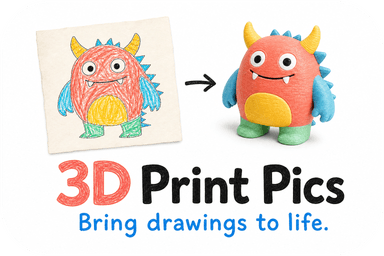
Personalization turns a gift into something a recipient keeps on a shelf rather than a drawer, and custom 3D printed keepsakes are a concrete example of how that works in practice. The process starts with a customer-supplied image, whether that's a company logo, a piece of client artwork, or a photo tied to a milestone. 3D Print Pics converts that image into a 3D model using AI-assisted generation, then shows the customer a preview before anything goes to print, so there's no guessing at the final shape or proportions.
- Choose from up to seven color options and multiple size specifications before approving a model.
- Materials are non-toxic PLA, a safety consideration that matters for gifts going to clients, employees, or their families.
- Works well for milestone recognition: service anniversaries, retirement gifts, or client appreciation pieces meant to sit on a desk rather than disappear into a drawer.
- A logo rendered as a physical object reads as more deliberate than the same logo printed on a mug or pen.
Pro Tip: Save personalized keepsakes for moments that deserve weight, like a five-year work anniversary or a major client renewal, rather than handing them out at scale where the personal touch gets diluted.
Lead times vary by order volume and customization complexity, and a rush processing option is available for buyers working against a tight date. The appeal here is straightforward: a physical, displayable object tied to a specific memory or brand asset does something a stack of pens cannot.

How to choose swag: a quick evaluation checklist
Buyers who skip a structured evaluation tend to over-order items that look good in a catalog and underwhelm in person. Run every potential item through the same short list of questions before committing budget.
- Audience fit: will this item make sense for the recipient's actual daily life, whether that's a desk, a gym bag, or a kitchen counter?
- Usefulness: does it solve a real problem, or does it exist mainly to carry a logo?
- Durability: will it still look good in six months, or will the print crack and the fabric fade?
- Supplier transparency: can the vendor name their material sourcing, certifications, and recycled content without hedging?
- Sustainability claims: are they backed by a specific certification (GRS, FSC) rather than a vague "eco" label?
- Lead time: does the supplier's quoted turnaround leave room for a sample approval and a reasonable buffer?
- Price band: does the per-unit cost match the item's expected lifespan and visibility (a $40 jacket should last years, not months)?
When talking to a new vendor, ask directly: "What percentage of this material is recycled, and can you provide certification?" and "What's your standard lead time versus rush, and what does rush cost?" A supplier who can't answer either question specifically is a red flag worth taking seriously.
Pro Tip: As a rough budgeting rule, plan $15 to $30 per person for routine recognition swag, $50 to $100 for onboarding kits, and $100 or more only for milestone or executive-level gifts.
What Gen Z and hybrid teams actually prefer
Preferences have shifted from quantity to quality, and the data backs that up directly. PPAI's Product Power 2026 study found that about 83% of consumers feel appreciated when they receive a promotional product, and 90% say branded merchandise improves how they view the company behind it. Custom Ink's swag trends survey adds that corporate buyers increasingly cite team unity, not brand exposure, as their top reason for purchasing swag, which pushes budgets toward apparel and drinkware that people actually wear together.
Why the small, personal gifts outlast the big giveaways
The industry's instinct is still to order in bulk, and that instinct is mostly wrong. A warehouse of logoed pens does less for employer brand than a handful of items people genuinely want to keep. What gets underestimated is how much a single well-chosen, personal object outperforms a pile of generic ones, not because it costs more, but because it signals that someone thought about the recipient specifically rather than the headcount. Working with custom printing and personalization technology has shown how much a tangible, individually made object changes the emotional weight of a gift compared to anything pulled from a catalog of a thousand identical units.
Proof points worth knowing about 3D Print Pics:
- Converts customer-uploaded photos, drawings, or logos into 3D models using AI-assisted previews before any order is finalized.
- Offers up to seven color choices and multiple size options in non-toxic PLA material.
- Supports both personal keepsakes (children's art, pet photos) and business use cases (logos, branded objects).
— Ian
3D Print Pics: how we help and how to order
Most swag suppliers sell you a catalog of items with a logo slapped on. We start from your image, whether that's a company logo, a client's artwork, or a photo tied to a specific milestone, and turn it into a physical 3D object that looks like it was made for that exact moment, not pulled off a shelf.

- Upload your image and get an AI-assisted 3D model preview before you approve anything.
- Choose from up to seven color options and the size that fits your use case, from a desk-sized keepsake to a larger display piece.
- All models print in non-toxic PLA, a practical safety consideration for gifts going to employees, clients, or their families.
- Need it fast? Rush processing is available for an additional fee when you're working against a deadline.
Custom 3D models are priced based on complexity and size. Current prices are available on the pricing page. For HR teams building a recognition program or procurement teams sourcing a standout client gift, this is a way to give something no one else is handing out. Start your custom 3D model and see your preview before you commit to anything.
FAQ
What are the best company swag items?
The best items are ones people use daily: quality apparel like quarter-zips, insulated drinkware, and useful tech like wireless chargers consistently outperform throwaway items. Industry data shows about 65% of recipients keep durable, well-designed branded items for six months or longer, which makes quality items a better long-term investment than bulk giveaways.
What are swag ideas for corporate events?
Conference and event swag works best when it splits into two tiers: lightweight, low-cost items like stickers and pens for general foot traffic, and premium, portable items like insulated drinkware or compact tech reserved for qualified leads. Experiential alternatives, like redeemable discount codes or limited-run collectibles, also drive booth engagement without the shipping weight.
What swag does Gen Z like?
Gen Z responds to sustainability and authenticity more than logo visibility, favoring items made with recycled or certified materials over generic giveaways. PPAI research found that younger consumers increasingly prefer durable, retail-quality items with transparent, sustainable sourcing over disposable promotional products.
What is the most popular conference swag?
Insulated drinkware, compact tech accessories, and premium notebooks consistently rank among the most kept conference items because they travel well and get used after the event ends. Corporate buyers are shifting budgets toward fewer, higher-quality items rather than mass giveaways, according to Custom Ink's 2026 swag trends survey.
How do personalized keepsakes compare to standard branded swag?
Personalized keepsakes, like a custom 3D printed object made from a logo or photo, tend to have stronger emotional retention than standard branded items because they're built around a specific image rather than a generic template. They work best for milestone moments such as anniversaries or client appreciation gifts rather than mass distribution.
Sources
- Research shows branded merchandise delivers sustainable impact and connects with Gen Z talent — PPAI
- Landmark study shows promotional products drive high marketing impact with a low carbon footprint — ASI Central
- Custom Ink survey shows corporate end-buyers prioritize high-end, stylish promotional products — ASI Central
- PubMed Central article (workplace wellness research)